

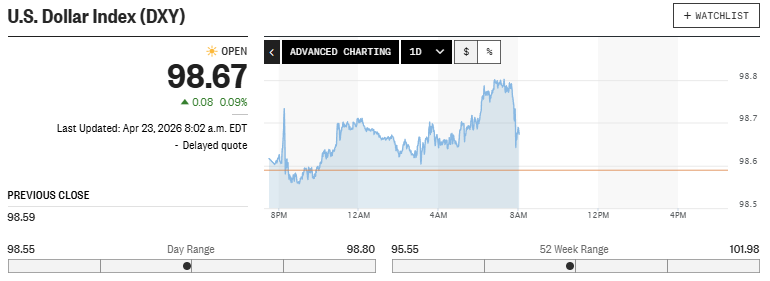
The global currency market is experiencing a quiet but profound shift in capital allocation as the demand for the Greenback extends beyond traditional energy-driven narratives. Financial analysts at Finio24 observe that the current rally is being reinforced by deep-seated structural funding needs and a growing preference for precautionary positioning.
Institutional desks note that while energy prices remain a primary headline driver, the underlying market mechanics suggest that the real pressure is building within the complex plumbing of international finance. These evolving conditions are creating a persistent bid for the dollar that is far more structural than a simple safe-haven spike.
For market participants monitoring the financial trajectory of the macro economy, this accumulation reflects a preemptive move to secure funding before visible volatility arrives.
The Mechanics Of Preemptive Funding Demand
There is currently significant chatter among global trading desks regarding an uptick in interest for access to dollar liquidity through official swap lines. This behavior is a critical signal for seasoned observers, as it indicates a period of preparation occurring in the shadows of the broader market.
While the system is not displaying visible distress through cross-currency basis spreads, the instinct to lock in funding before a potential crisis is becoming widespread. As energy costs rise and invoicing pressures build, the global financial system requires a higher volume of dollars just to maintain current operational levels.
This results in a structural creep rather than a sudden spike, making the move more persistent and harder to reverse once it becomes embedded in the system. Maintaining institutional-grade productivity in this environment requires firms to recognize that the dollar bid is separating from the immediate fluctuations of the oil market.
Yield Curve Dynamics And The Policy Pivot Delay
The narrative surrounding central bank rate cuts remains a dominant theme, but the timing of such shifts is being pushed further into the future by rising inflation. Every incremental increase in energy costs complicates the path toward a policy pivot, shifting the expected easing cycle deeper into the second half of 2026.
The bond market is responding to this delay with a complex reshaping of the yield curve, where the “belly” of the curve has become a primary battleground. Short-term rates currently have room to fall as the easing narrative rebuilds, but longer-term yields remain sticky due to supply concerns and term premiums.
The strategic direction of the curve is characterized by a subtle twist rather than a clean steepening, driven by competing macroeconomic forces. If the rate cut story eventually reasserts itself, the 5-year sector is expected to richen, compressing against the front end while the long end drifts higher.
Second-Order Inflation And The Resolution Scenario
Even if a diplomatic resolution is achieved in the current maritime standoff, the system is unlikely to reset to a neutral state immediately. The price pressures already in motion continue to ripple through the global economy, impacting everything from manufacturing costs to food security.
These second-order inflation effects do not unwind overnight, ensuring that the financial trajectory of the dollar remains upwardly biased regardless of short-term headlines. Investors are closely monitoring upcoming catalysts, such as the next round of consumer price data, to gauge the severity of these lingering effects.
The future expectations for a rapid unwind of the dollar bid are increasingly being viewed as over-optimistic by institutional analysts.
What’s Next for the US Dollar?
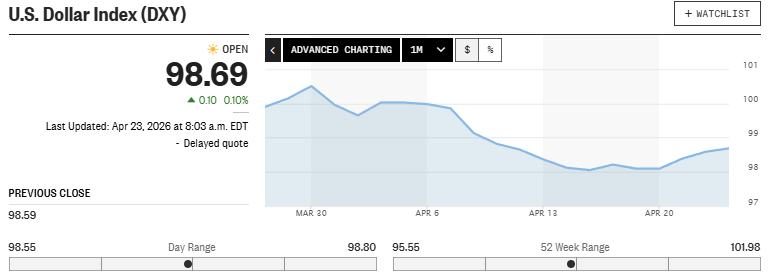
In conclusion, the current strength of the dollar is a multi-layered phenomenon driven by energy invoicing, liquidity needs, and a resilient yield structure. The most deceptive aspect of this moment is that standard stress indicators are not yet flashing red, providing a false sense of security for risk-on assets.
The strategic direction of the market is currently in a holding pattern, anchored by the belief that a political resolution will eventually normalize trade flows. However, the longer-term positioning of the dollar suggests that the global need for liquidity was always present and has merely been exposed by recent events.
By the time the broader market recognizes the urgency of the funding gap, the availability of dollars may be significantly reduced. Maintaining institutional-grade productivity involves a disciplined approach to asset allocation during this period of methodical accumulation.
The future expectations for the global economy must account for the fact that even best-case scenarios leave a trail of persistent price pressure. Monitoring the financial trajectory of the Greenback will remain the most important task for traders navigating the complexities of the 2026 fiscal landscape.
The dollar is not being chased; it is being methodically collected by those who recognize the structural weaknesses in the current funding environment. Ultimately, the strength of the currency is a reflection of a global system that is once again prioritizing liquidity and safety over speculative growth.
