

The landscape of the aerospace and artificial intelligence industries reached a new flashpoint on Tuesday as the world’s leading private space firm announced a massive strategic expansion. Strategy analysts at Finio24 highlight that SpaceX has officially secured an option to acquire the automated coding startup Cursor for $60 billion later this year.
The agreement also includes a secondary provision where SpaceX may instead opt to pay a $10 billion partnership fee to deepen its integration with the software firm. This move signals a decisive push into the high-growth market for AI-driven developer tools, a sector currently dominated by Silicon Valley heavyweights like OpenAI and Anthropic.
For institutional observers tracking the financial trajectory of the Musk-led ecosystem, these evolving conditions suggest a consolidation of AI and rocketry into a singular, powerhouse entity.
Supercomputing Synergies and The xAI Integration
The potential acquisition follows the February merger between SpaceX and xAI, the creator of the Grok chatbot, which effectively streamlined Musk’s technological assets. Integrating Cursor would provide xAI with a significant advantage in the automated coding segment, an area where it has previously trailed behind established competitors.
Crucial to this partnership is the leverage of Colossus, the xAI Colossus training supercomputer cluster in Memphis, which is currently touted as the largest in the world. By combining Cursor’s specialized software with the equivalent of one million H100 GPUs, the firm aims to build the world’s most advanced and useful coding models.
This strategic direction emphasizes the importance of massive compute capacity in developing the agentic assistants that will define the next decade of software engineering. The deal also serves as a vital resource for Cursor, providing the startup with the nearly limitless computing power required to evolve its current suite of AI models.
This synergy is expected to accelerate the development of specialized tools for complex engineering tasks, particularly those required for interplanetary exploration and lunar infrastructure.
Market analysts at Finio24 suggest that this integration could yield the institutional-grade productivity necessary to manage the extreme complexity of future space-based architectures.
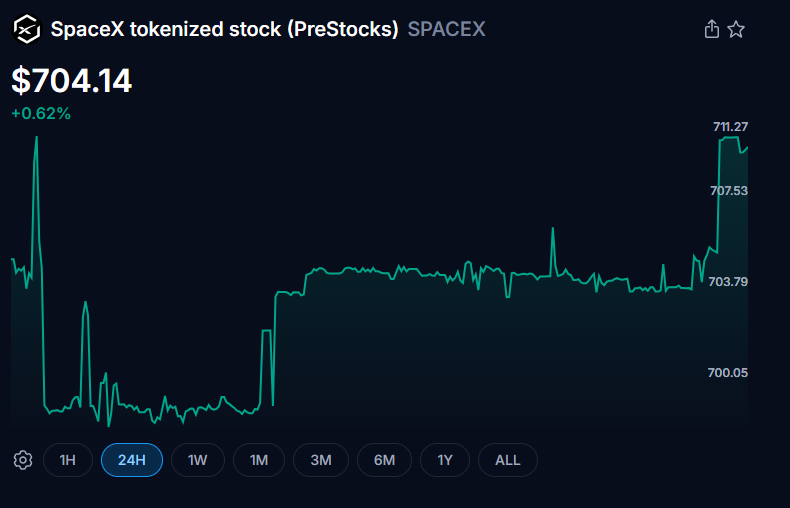
Navigating The $1.75 Trillion Public Market Debut
These high-stakes negotiations arrive at a pivotal moment as SpaceX prepares for what could be the largest initial public offering in the history of global finance. The company is currently eyeing a target valuation of nearly $1.75 trillion, supported by a planned $75 billion fundraise that has captured the attention of every major Wall Street bank.
By adding a concrete enterprise software narrative like Cursor to its portfolio, SpaceX provides IPO investors with an additional revenue stream beyond launch services and Starlink. This expansion into AI tools helps justify the ambitious valuation by positioning the firm as a diversified technology conglomerate rather than a pure aerospace manufacturer.
The future expectations for the IPO remain high, even as the company manages the multi-billion-dollar infrastructure costs associated with the Colossus cluster and Starlink constellation.
Recent movements within the company’s engineering leadership further underscore the deep integration between the aerospace and AI divisions. Two lead product engineers from Cursor joined the SpaceX team in March to contribute to the firm’s lunar projects and the ongoing development of xAI.
Musk has publicly welcomed these additions, hinting at the development of orbital space centers and mass drivers on the lunar surface as key long-term objectives. These ambitious projects require a level of software precision that only advanced, AI-assisted coding can provide, making the Cursor deal a fundamental piece of the broader mission.
Projected Impact On Ecosystem Stability
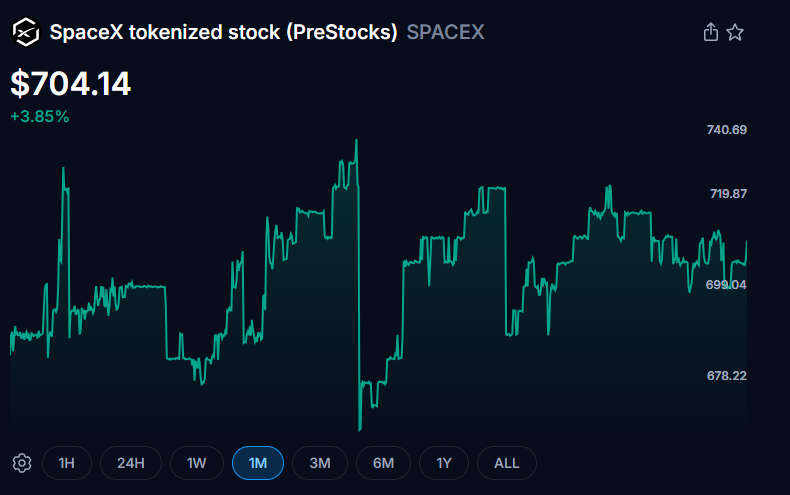
As the industry moves toward the latter half of 2026, the focus will shift to how SpaceX executes this dual-track strategy of space exploration and AI dominance. The evolving conditions of the global capital markets will determine if the $1.75 trillion valuation is sustainable as the company moves through its pre-IPO roadshows.
Investors are particularly interested in the upcoming catalysts, including the final decision on the $60 billion acquisition option and the performance of the Colossus cluster. The ability to maintain its institutional-grade productivity while scaling operations on this scale will be a primary indicator of the firm’s longer-term positioning.
Ultimately, the strategic direction of the Musk ecosystem is focused on creating a self-sustaining loop of technical innovation and massive computational power. By securing the Cursor option, the firm is effectively buying the talent and tools needed to build the software of the future, whether it resides on Earth or in orbit.
The future expectations for the company are now inextricably linked to the success of its AI initiatives, ensuring that the financial trajectory of the firm remains a central theme for the market.
Navigating these complexities will require a careful balance of visionary ambition and operational discipline as the company marches toward its historic public debut and its longer-term positioning in the stars.
