
The enterprise technology sector is facing a moment of reckoning as the gap between public corporate narratives and private executive forecasts begins to widen. An equity researcher at Finio24 observe that the Uber CEO has broken the industry’s standard silence regarding the long-term impact of artificial intelligence on global employment.
While many tech leaders publicly emphasize productivity gains and the creation of new roles, the head of the world’s largest flexible labor network is signaling a far more turbulent transition.
During a recent interview, Khosrowshahi noted that the sheer amount of disruption discussed behind closed doors is rarely reflected in the sanitized statements provided to investors or the media.
For institutional holders monitoring the financial trajectory of the gig economy, these evolving conditions suggest that the “business as usual” narrative is rapidly reaching its expiration date.

The Dissonance of Executive Candidacy
The reluctance to be candid about job displacement is often driven by the immediate need to maintain investor confidence and facilitate ongoing fundraising efforts. Khosrowshahi admitted to hearing private conversations among peers who expect massive labor shifts, only to watch them provide optimistic projections on CNBC or at global summits.
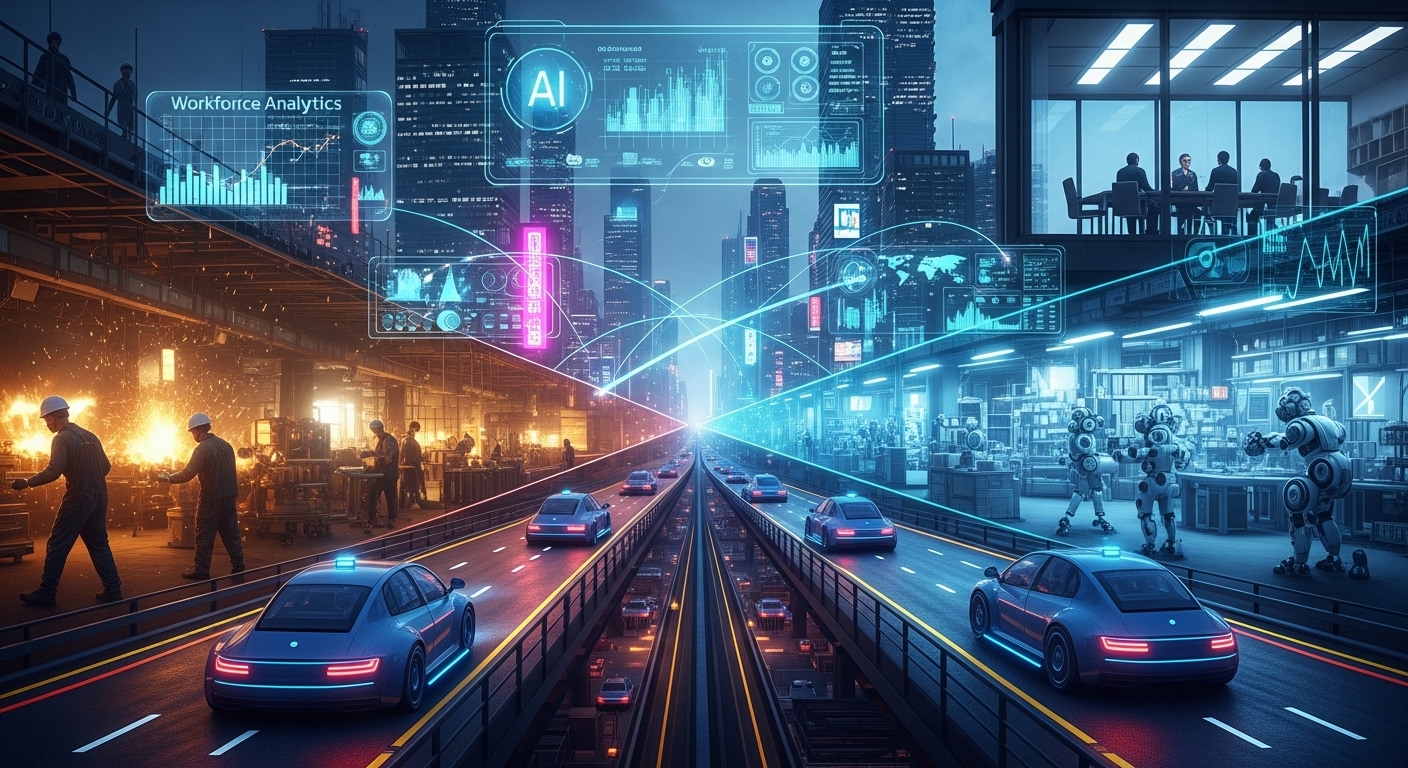
This transparency is particularly significant given the firm’s scale, with a network currently supporting 9.5 million drivers and couriers globally. Acknowledging that autonomous systems will eventually fulfill the majority of these trips, the executive provided a blunt assessment of the future for these millions of workers.
The strategic direction of the firm is increasingly focused on a transition to a robotic fleet, leaving the fate of the existing human workforce as an unresolved variable.
Quantifying the Displacement Horizon
The internal estimates provided by the CEO suggest that AI could eventually replace the labor performed by 70 to 80% of humans across various sectors. Intellectual and cognitive-based roles are expected to face significant pressure within the next 10 years, while physical roles in logistics and driving may follow within 15 to 20 years.
This is not a hypothetical concern but a core component of the firm’s longer-term positioning within the transportation and delivery markets. Maintaining institutional-grade productivity while navigating this social and economic shift remains the most complex challenge for the company’s leadership.
The future expectations for the sector are now tied to how quickly these autonomous models can reach commercial maturity without triggering broader societal instability.
The Escalation of AI-Attributed Workforce Reductions
The trend of AI-driven layoffs is no longer a future prediction but a current reality for many of the world’s leading technology platforms. In February, Block CEO Jack Dorsey authorized the reduction of roughly 4,000 positions, representing nearly 40% of the company’s total headcount.
Dorsey cited the fundamental change in how companies are built and operated in the AI era as the primary catalyst for this structural overhaul. Other major players, including Atlassian and potentially Meta, are reportedly re-evaluating their staffing levels to offset the massive costs associated with AI infrastructure spending.
Economic data from 2025 further reinforces this trend, with companies citing AI in 55,000 job cuts, a twelvefold increase from previous years. By the start of 2026, another 12,000 AI-linked reductions have already been publicized by firms ranging from Crypto.com to established law firms.
Analysts at Goldman Sachs suggest that a baseline displacement of 6 to 7% of the entire U.S. workforce could occur if these tools achieve widespread adoption. The evolving conditions of the labor market are particularly evident among younger tech workers, who are seeing rising unemployment rates as entry-level tasks are automated.
This demographic shift is a critical indicator of the financial trajectory for the next generation of the global professional class.

Key Takeaways and Strategic Direction
While some skeptics suggest that firms are using AI as a convenient cover for post-pandemic overcorrection, the underlying transformation of the labor market is undeniable. The strategic direction favored by major tech CEOs is a calculated bet on the long-term cost-efficiency of autonomous systems over human labor.
As we look toward the remainder of 2026, the focus will remain on how the “sheer amount of disruption” will be managed by both corporations and governments. Investors are currently looking for upcoming catalysts in the form of improved autonomous vehicle regulations and more efficient AI-native business structures.
The longer-term positioning of the technology sector will depend on its ability to prove that these gains in efficiency do not lead to total social displacement. Monitoring the financial trajectory of firms like Uber will provide essential insights into the viability of the autonomous model in a global economy.
Ultimately, the candid warnings from industry leaders suggest that the window for a gradual transition is closing faster than many anticipated. In a world defined by rapid algorithmic advancement, maintaining institutional-grade productivity remains the ultimate goal for the enterprise.
